
Official data · Driver verified
How it works
Parkwise starts with trusted parking information, then gives drivers the tools to verify important details, report recent availability and flag anything that has changed — so you can understand where you can park before you arrive.
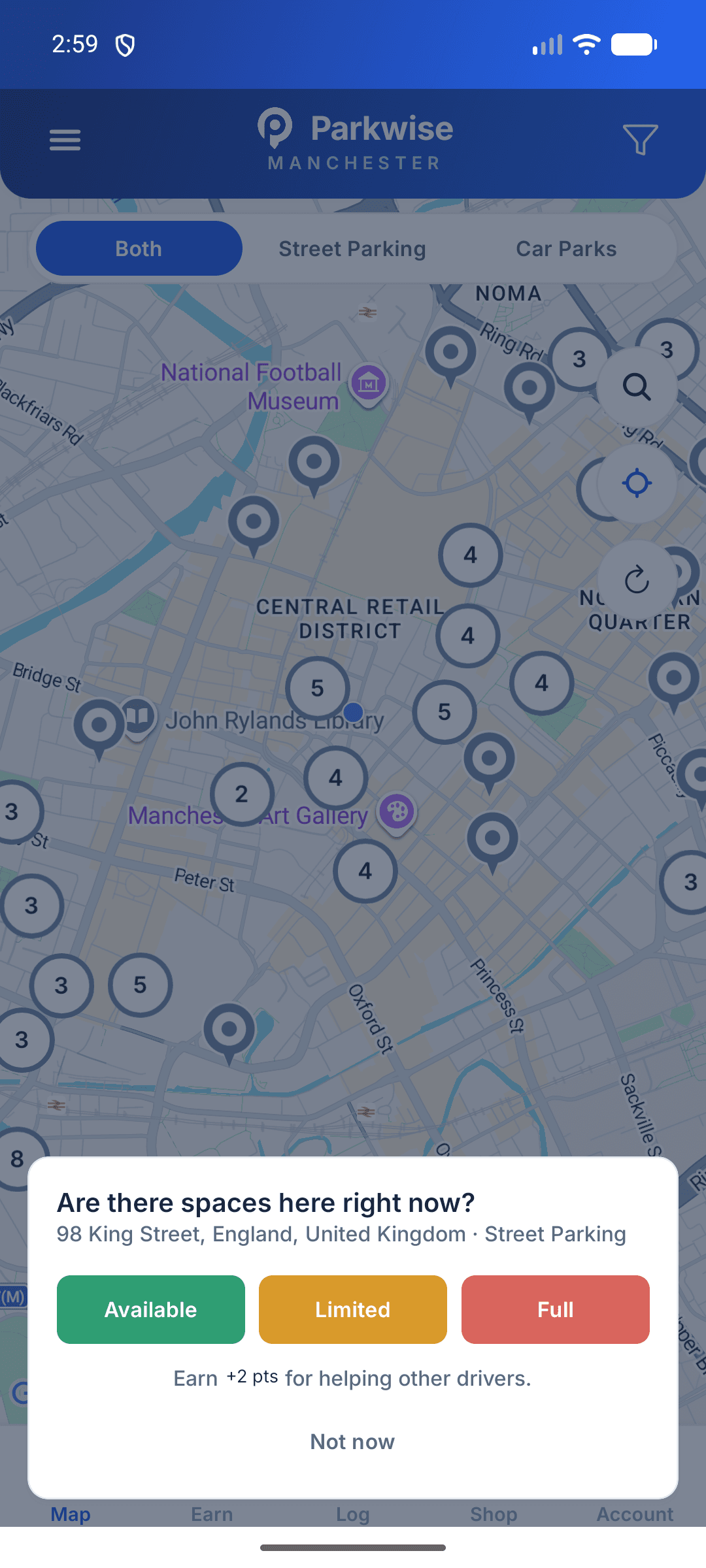
- 01
It starts with trusted parking information
Parkwise brings together available council, operator and other trusted source information to create a useful starting point for each parking location. That starting point is then open to driver checks — it is not treated as finished on import alone.
- 02
Drivers verify the important details
When they are near a parking location, drivers can confirm stable information such as the pin position, parking type, price, maximum stay, operating hours and restrictions — the details that should match the signs on the street.
- 03
Recent reports show what parking is like now
Drivers can also report recent availability so others have a better idea of what to expect before they arrive. These reports are community updates, not a reservation, live sensor feed or guarantee of a free space.
- 04
Changes trigger further checks
If someone reports an incorrect price, a changed restriction or a misplaced location, Parkwise flags the information for further verification. A single report does not silently overwrite trusted parking details.
- 05
Helpful contributions earn access
Drivers who help improve the map can earn points and use them to extend their access — a simple loop that rewards useful updates without turning the product into a game. See how free access works.